CUT FLOWER CARE
How good a bouquet looks in a vase depends on more than the freshness of its flowers. Once it reaches your home, the cleanliness of the vase, how the stems are cut, how often the water is changed and where the bouquet is placed all directly affect the result. A few simple but consistent steps make it easier for the flowers to absorb water and help preserve their form for longer.
The right order for preparing a bouquet for a vase
- Wash the vase. An invisible film left by previous flowers can cause the water to become dirty more quickly. Rinse the vase thoroughly so no detergent remains.
- Remove the wrapping carefully. Remove the outer wrapping without immediately undoing the main binding point, which helps preserve the design’s form.
- Remove leaves that would enter the water. Leaves left in water reduce its quality. Clean only the lower section without touching the flower heads or upper leaves.
- Recut the stems. Use sharp flower scissors or a clean knife. A crushed stem absorbs water less effectively.
- Add an appropriate amount of water. Ensure a sufficient section of the stems remains in water; prioritize any care note specific to the flower variety.
How often should the water be changed?
Check the vase water daily. Change it without delay if it becomes cloudy, smells or contains residue at the bottom. For general care, using fresh water every one–two days and rinsing the vase with each change is a safe routine. Simply topping up the water does not remove accumulated residue.
Recutting a very small section from the stem ends during a water change refreshes the surface that absorbs water. If flower food is provided, follow the quantity on the packet; adding too much by eye is not appropriate. Instead of adding random amounts of sugar, bleach, aspirin or other household products to the water, use clean water and follow the care instructions supplied with the product.
| Sign | Possible cause | Action to take |
|---|---|---|
| Water quickly becomes cloudy | Residue in the vase or leaves below the waterline | Wash the vase, remove lower leaves and add fresh water |
| Flower heads droop early | The stem may not be absorbing enough water | Recut the stem end cleanly at an angle |
| Leaf edges are drying | Heat, sunlight or airflow | Move the bouquet to a cooler position with balanced light |
| The vase develops an unpleasant smell | The water has not been changed for too long | Empty the water, clean the vase and check the stems |
Where should the vase be placed?
Keep the bouquet away from a window in direct sunlight, a radiator, an air-conditioning vent or a constant draft. A cool, bright position with indirect light is more balanced. Placing it immediately beside a bowl of ripening fruit is also not ideal for cut flowers; where possible, leave space between the vase and fruit bowl.
The five most common care mistakes
- Leaving the bouquet without water in its delivery wrapping for hours
- Putting stems directly into the vase without cutting them
- Failing to remove leaves below the waterline
- Only adding water and never washing the vase
- Leaving a few faded flowers among the entire bouquet instead of removing them
How should a mixed bouquet be cared for?
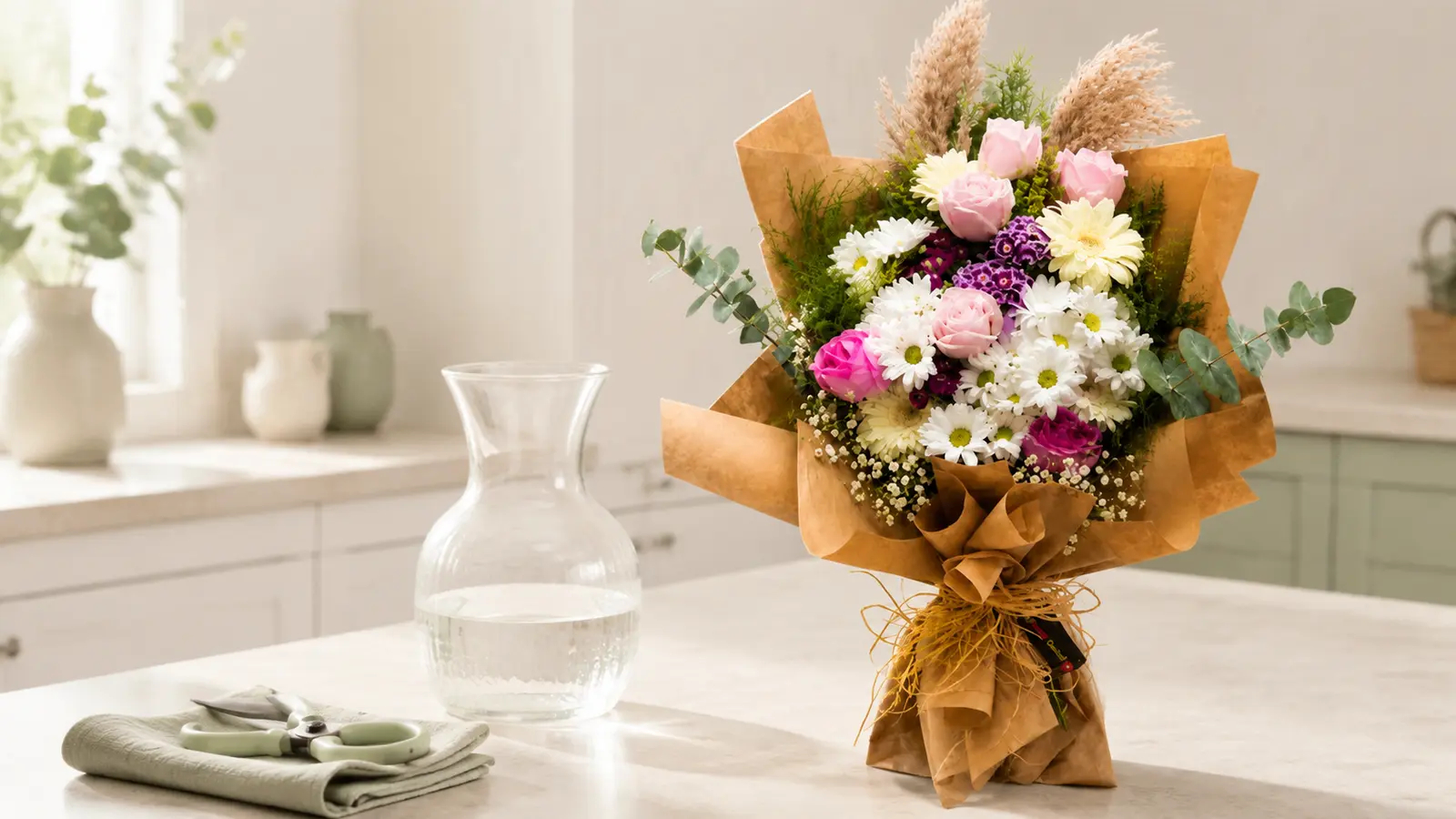
Mixed bouquets combine flowers with different stem structures. Rather than completely undoing the design’s binding, preserve its form while cleaning the section that would remain underwater. If a stem reaches the end of its life over time, remove it with clean scissors; you can rearrange the remaining healthy flowers in a smaller vase.
With naturally textured designs containing many varieties, such as the Authentic Bouquet, it is important that the vase opening does not compress the bouquet. To compare size and form when choosing a new bouquet, explore the flower bouquet collection.
A small care detail for roses
Cutting rose stems at a clean angle and leaving no leaves underwater are the basic steps. The outer guard petals may look different depending on the product; do not remove an unnecessary number of petals. For rose designs in different forms, follow the care note supplied with the product.
A small care detail for lilies
Pollen from open lilies can mark fabric. Carefully remove the anthers with a clean tissue without shaking the flower. To compare products with buds, explore the lily options.
A daily 30-second check
Check whether the water is clear, the stems remain submerged, any branches have faded and the bouquet is near a heat source. A brief regular check is more helpful than one intensive intervention.
A five-day care plan for your bouquet
| Time | What to check | Purpose |
|---|---|---|
| Delivery day | A clean vase, removal of lower leaves and a fresh stem cut | Help the flowers access water quickly |
| Second day | Water clarity and vase position | Prevent early deterioration caused by heat and dirty water |
| Third day | Change the water, clean the vase and refresh the stem ends | Maintain the water-absorption surface and hygiene |
| Fourth–fifth day | Remove stems that have reached the end of their life and move the bouquet to a smaller vase if necessary | Display the healthy flowers more neatly |
This schedule is not a guarantee of a specific vase life; flower variety, room temperature and the stage of bloom at delivery affect the result. Regular checks, however, help you notice a problem before the flowers are completely worn. Choosing one balanced position instead of moving the bouquet every day, and handling it gently only during care, also reduces the risk of breakage.
Frequently Asked Questions
Should flower water be warm or cold?
For most bouquets, clean water between cool and lukewarm is suitable. Do not use very hot or ice-cold water; follow any special instructions supplied with the product.
Should sugar be added to vase water?
The proportions of homemade mixtures can easily become unbalanced. If flower food is available, use the stated amount; otherwise, keeping the vase clean and changing the water regularly is more controlled.
Should faded flowers be removed from a bouquet?
Yes. Removing stems that have reached the end of their life with clean scissors helps the remaining bouquet look neater and makes care easier.
Should a bouquet be placed in the refrigerator overnight?
The temperature, humidity and food-storage conditions of a household refrigerator may not suit flowers. Keeping the bouquet in a cool room away from direct heat and airflow is a safer method.