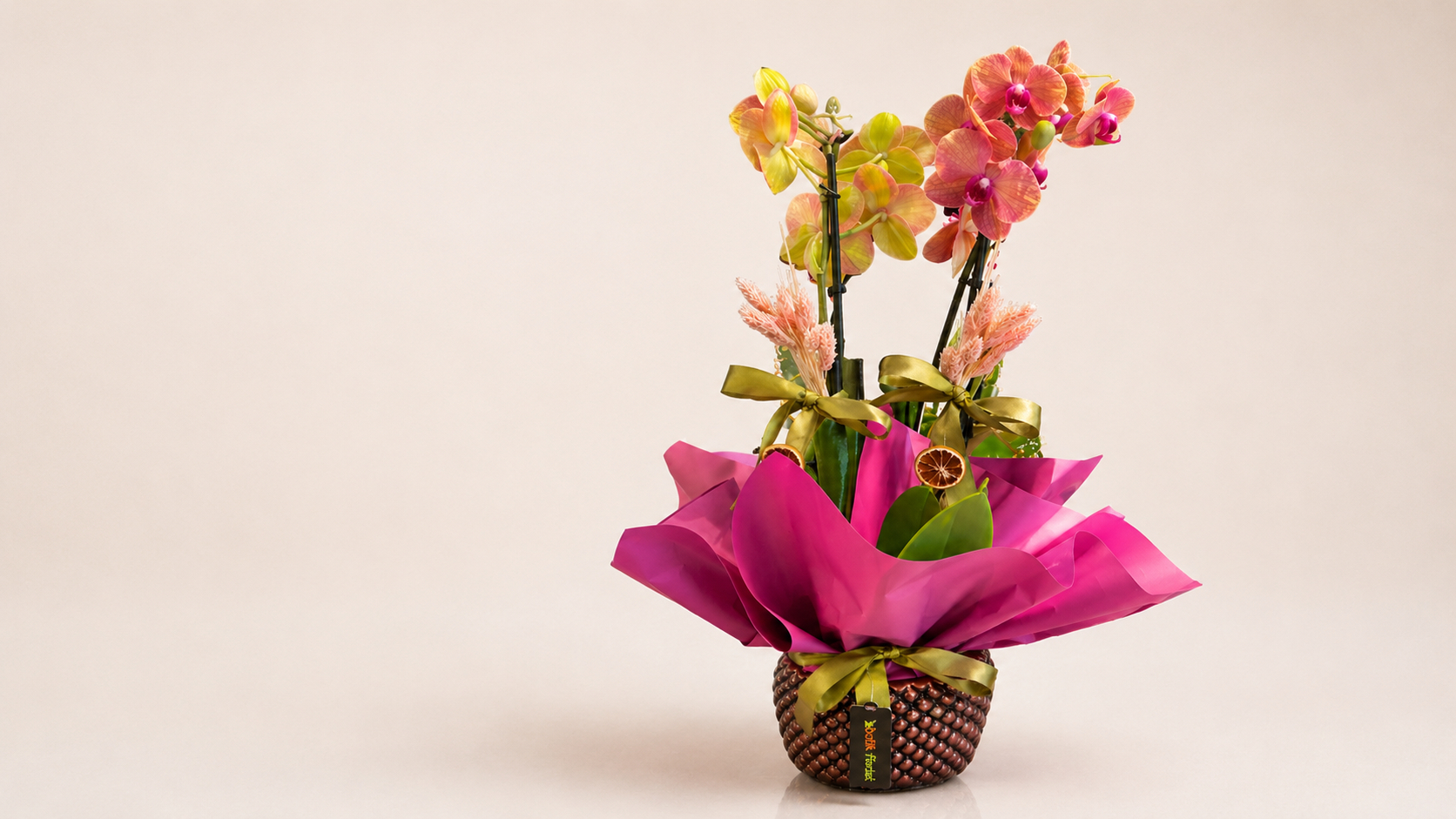
The orchid is one of the most admired ornamental plants: a delicate, exotic and elegant flower. The meaning of the orchid symbolizes love, beauty, luxury and strength. Orchids are therefore perfect flowers for celebrating all of life's precious moments. They are also known for being difficult to care for, but for many plant enthusiasts, their impressive beauty and grace make the effort worthwhile. Knowing the meaning of the orchid and what it symbolizes is a way to convey your intended message to someone you love or value.
Orchid Colors and Their Meanings
Like the unique colors of a rainbow, orchids come in many vivid and impressive shades. Rich in symbolism, each orchid has its own importance and meaning. The orchid's general meaning ranges from attraction and beauty to refinement and fertility, and these remarkable flowers are suitable and distinctive for every kind of celebration and occasion. Orchid meanings also change according to color. The meanings of orchids by color are as follows:
·
White Orchid: White carries meanings of purity and cleanliness. The same is true of orchids, and white orchids symbolize purity as well as faith, humility, safety, elegance, innocence and beauty. People value the delicacy and grace of white orchids. White orchids are among the most meaningful and treasured flowers to send for any special occasion to a mother, partner, friend, sister who has recently given birth or spouse.
·
Blue Orchid: Blue orchids are a particularly meaningful gift for someone whose beauty you admire. For such a person, there may be no better flower than a blue orchid. This distinctive, elegant flower symbolizes unusual yet natural beauty: the beauty we see in someone we love dearly and who has a special place in our heart. The blue orchid symbolizes beauty and uniqueness.
·
Purple Orchid: Purple orchids generally represent nobility and authority. Sending a purple orchid to someone you love will make the recipient of this uniquely beautiful, noble flower feel important. Its appeal and charm will captivate someone you want to make happy.
·
Pink Orchid: Pink orchids are rare flowers that symbolize femininity, grace, kindness and happiness. They also express fertility, captivating mothers and families as they enter the magical world in which happiness is multiplied through motherhood.
·
Red Orchid: Red orchids, like red flowers in general, symbolize love, passion and romance. For someone who holds a special place in your life, whom you like or love, or for your spouse, you can step away from the ordinary by giving a red orchid instead of red roses, both surprising them and expressing the strength of your love.
·
Green Orchid: You can give green orchids, representatives of luck, goodness and health, to people you value and believe bring luck to your life. Keeping green orchids in your home symbolizes the belief that they will bring you good luck.
How Should You Care for an Orchid?
Orchids are as difficult to grow and demanding of care as they are delicately beautiful. Orchids require attentive care, almost like a baby, and when their needs are met attentively, they will reward you by opening their delicate buds and flowers. When you care for an orchid thoughtfully, it may reward your special effort with elegant, impressive flowers for years. Caring for these distinctive flowers involves many considerations, including how to fertilize them, where they thrive, how to water them and what kind of pot they need. These can be summarized as follows:
1. How Should Orchids Be Watered?
As with all flowers, orchids usually lose vitality or wilt because of incorrect or excessive watering. Rather than being watered routinely and frequently, orchids should be watered according to their needs and how much water they use. This will again vary with their location, humidity and light. The orchid itself indicates its needs according to its conditions; what matters is monitoring it. In other words, it should be watered just before it begins to dry out. When the potting mix has dried, it is time to add more water. When watering, pour water through the potting mix and always allow the excess to drain from the bottom.
2. How Should You Choose an Orchid Pot?
Choosing a pot for an orchid can sometimes be confusing. The most important point is that the pot should not retain water. It should therefore have plenty of drainage holes that allow excess water to escape. Orchids do not like excess water, so it should not collect in their pots. Orchids generally prefer large, transparent pots because their roots need light as much as their flowers do. Large pots with ample drainage also allow the roots to breathe more freely.
3. Where Do Orchids Thrive?
Orchids are generally a tropical plant. It therefore dislikes air-conditioned, dry environments, which create difficult growing conditions. East-facing windows are excellent locations for orchids. Uncurtained south-facing spots may receive excessive daylight and become hot, but positioning the plant a little farther back may filter the light enough. Orchids generally dislike north-facing locations because they are too dim. Their flowers need some daylight and humidity to shine. Orchids generally bloom abundantly and impressively when they thrive in their location, inspiring admiration.
4. How Do You Fertilize Orchids?
Your orchids should be fed regularly with a balanced, healthy fertilizer containing very little or no urea. Another recommendation is to fertilize an orchid with water-soluble fertilizer at quarter strength each time you water it. In other words, mix ¼ of the amount stated on the fertilizer with water. This mixture may be given to orchids weekly. The roots in the pot should not be dry when fertilizing, as this may burn them.
Frequently Asked Questions
How Much Light Do Orchids Need?
Orchids thrive in strong light and enjoy it, but direct exposure can burn their flowers. Do not expect them to bloom in a place without enough light. They generally prefer bright, indirect light from the east and south.
How Are Orchids Propagated from a Stem?
To understand orchid propagation, it is necessary to know the flower's characteristics and growing conditions well. Orchids are usually propagated from the roots, but propagation from a stem is also possible. A leaf or stem is removed and left in a container of water for one or two days so that the stem develops roots. It can then be moved to another pot, watered every two days and grown in a place with less sun.
How Can You Encourage an Orchid to Bloom?
An orchid that once bloomed abundantly may stop flowering after a while. At this stage, you may think it has died, but the orchid is dormant. This period lasts approximately six to nine months. During this time, you need to fertilize the orchid so it can bloom again. Place it in a cooler environment between 19-28 degrees. Always keep it where it receives some indirect light and continue caring for it attentively. If you are lucky, your orchid may bloom twice a year.